
 ~9 min
Marvel Rivals hands you its entire roster of 50+ heroes for free from the first login, charges money for cosmetics only, and decides its matches with strategy more than twitch aim, which makes it one of the friendliest competitive shooters to start in 2026. It is also deep enough that new players waste their first weeks on the wrong lessons. This guide is the efficient route through the first ten hours: what actually matters on day one, the modes worth queueing, the heroes that forgive mistakes, the habits that win games before mechanics do, and the milestones on the road to ranked.
What Kind of Game You Just Installed
Marvel Rivals is NetEase's free-to-play 6v6 hero shooter: two teams of six, objective-based maps, and a roster where every hero plays like their comic-book self. Three design choices define it against other shooters:
- Zero pay-to-win. The full roster is free, and the store and Battle Pass sell cosmetics only. Nothing purchasable makes a bullet hit harder, which means the only gap between you and better players is knowledge and reps.
- Destructible environments. Maps break and reshape mid-match: walls fall, cover disappears, and sightlines open. A position that was safe two minutes ago may not exist anymore, which quietly punishes players who stop paying attention to the map itself.
- Strategy over twitch. Team composition, role synergy, and the Team-Up ability system reward coordination and decision-making more than raw reflexes, which is why smart new players climb faster here than in aim-first shooters.
Every hero runs on the same skeleton: a primary fire, a secondary, two or three abilities on cooldowns, and an ultimate that charges from dealing and receiving damage. Learn one hero's skeleton and the whole roster becomes legible.
Day One: The Right First Hour
- Fix the settings before the first match. Ten minutes in the menus buys permanent frame rate and input latency the game does not give you by default; the full sheet is in our settings and FPS guide, and the short version is: Lumen off, upscaler on Quality, V-Sync off, Reflex on.
- Spend twenty minutes in Practice and vs AI. Not to get good, but to learn the skeleton: fire, abilities, ultimate, on three or four heroes that look appealing. These modes pay no progression, so leave once the buttons make sense.
- Then queue Quick Match and stay there. Real players, real chaos, low stakes. Everything that matters is learned here.
The Modes, and Which Ones Matter Now
Mode | What it is | For a new player |
|---|---|---|
Quick Match | The core 6v6 across the map pool's objective types: Domination (capture and hold points), Convoy (escort a payload), and Convergence (capture, then escort) | Home for your first weeks; everything below builds on it |
Practice and vs AI | Button-learning sandboxes | Useful for twenty minutes per new hero; they pay no real progression, so do not live here |
Arcade | Rotating casual formats | Fun variety and light rewards; treat as a side dish |
Competitive | The ranked ladder, locked until account level 15 | The destination, not the starting point; more below |
Learn the three objective types early, because they explain most losses that feel mysterious: a team that fights well but never touches the point loses Domination, and a team that forgets the payload loses Convoy to a single sneaky enemy riding it.
Pick a Role, Then a Forgiving Hero
Every hero belongs to one of three roles, Vanguard holds the frontline, Duelist deals the damage, Strategist heals and enables, and the game has no role queue, so knowing all three jobs at least conceptually is part of the education; the full breakdown lives in our roles guide. For the first hours, these picks forgive mistakes while teaching the right lessons:
Hero | Role | Why it teaches well |
|---|---|---|
The Punisher | Duelist | An assault rifle and shotgun with no exotic mechanics: FPS instincts transfer directly, and a 300 HP pool buys room for positioning errors |
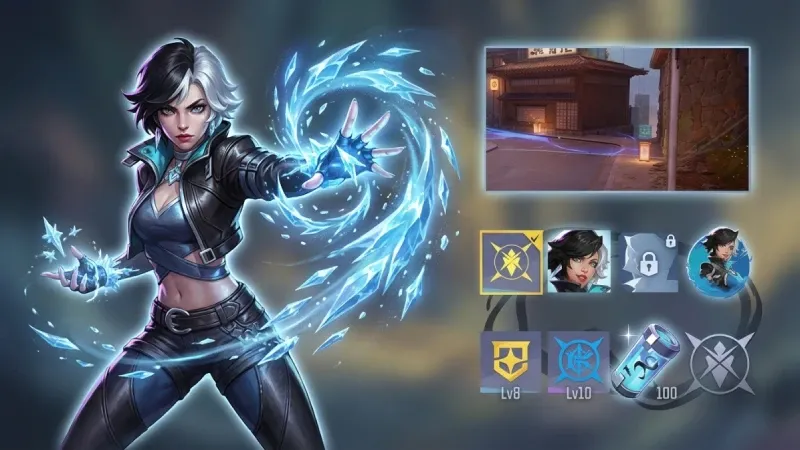
Luna Snow | Strategist | Her frost shards automatically heal allies or damage enemies depending on your target, so one attack teaches both jobs; her ultimate toggles between a 250 HP per second team heal and a 40% damage boost |
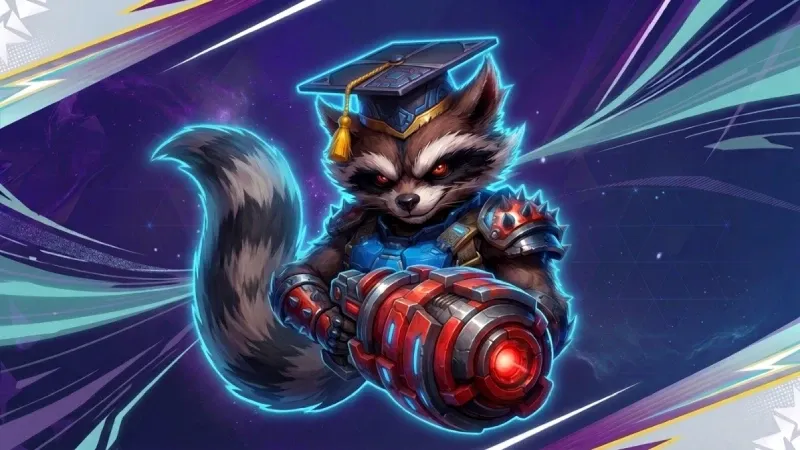
Rocket Raccoon | Strategist | Healing spheres ricochet off walls up to ten times, so you can support teammates from behind cover while your positioning sense is still developing |
Groot | Vanguard | A big, straightforward frontline body whose walls make space-making visible: you can see the job of the role happening |
Rotate through two roles in your first week rather than settling instantly. Which heroes are strongest this patch is a different question from which teach best, and when you are ready for it, the Season 9 tier list answers it by rank bracket.
Five Habits Worth More Than Aim
- Play the objective, not the deathmatch. Kills are the means; the point, the payload, and the timer are the game. The most common beginner loss is a team that wins fights ten meters from where the match is decided.
- Stay with your team. A 6v6 shooter is a series of 6v6 fights, and every player who wanders converts them into losing 5v6s. If you die alone somewhere interesting, the death was the mistake, not the fight.
- Watch your deaths, not your kills. Deaths cost your team a player for long seconds and feed the enemy's ultimates. A quiet game with three deaths routinely contributes more than a loud one with fifteen.
- Hold the ultimate for fights that matter. Ultimates charge from damage dealt and taken, and they are the currency big fights are bought with. Spending one to finish an already-won skirmish is the classic new-player leak.
- Say things. Even just pings: the flanker's position, the regroup call, the objective. Communication is the cheapest team-wide buff in the game, and nobody expects eloquence.
The Skill the Game Is Balanced Around: Switching
Heroes can be swapped freely at spawn, and Marvel Rivals is explicitly balanced around counter-picking: every strong strategy has heroes designed to dismantle it. Three shield tanks stacking up? Piercing damage like Hela's, whose arrows punch through multiple targets and can apply Anti-Heal, exists for exactly that wall. Getting deleted by a flanker every fight? Someone swaps to peel. The sunk-cost instinct to stay on a struggling pick, because you have practiced them, because switching feels like admitting defeat, is the single most identified beginner error in the game, and shedding it early is worth more than any mechanical drill. The swap is free. Use it like it is.
Save -20% on your boost ⚡

The Mistakes Every New Player Makes
All of these are normal, and all of them are cheaper to fix in week one than in month three.
The mistake | Why it hurts | The fix |
|---|---|---|
One-tricking out of comfort | The game is balanced around counters; a single hero means no answer when yours gets shut down | Two heroes per role you queue, from the first week |
Living in vs AI | Bots teach button order, not judgment, and the mode pays no progression | Twenty minutes per new hero, then real queues |
Chasing kills off the objective | The scoreboard is not the win condition, and the match is decided where you are not standing | Ask "where is the objective" before "where is a kill" |
Wandering off alone | Every solo adventurer turns team fights into 5v6s | Move when your team moves; flank with a purpose and a way back |
Dumping ultimates on won fights | Ultimates are the currency of big fights; spending one on a finished skirmish donates the next fight | One breath before pressing Q: does this fight need it? |
Treating cover as permanent | Maps are destructible; the wall you are hiding behind can stop existing mid-fight | Re-check your cover every fight, and break theirs |
Buying cosmetics in week one | Achievements and missions shower a new account with currency; early purchases skip the free pipeline | Play two weeks, then spend with a plan |
Two Systems to Know About, Not Master
Two mechanics will appear in every guide and lobby conversation, and for now, awareness is enough.
Team-Ups. Every hero carries two selectable Team-Up loadouts, chosen at hero select, each granting a bonus ability whose base version works regardless of your team and whose enhanced version activates when a specific partner hero is present. Week-one duty: open the loadout panel on your mains, read both options, pick the one whose base effect sounds useful, move on. The drafting layer on top of this is a mid-rank skill, not a day-one one.
Destruction as a weapon. Breakable terrain is not just scenery risk; it is a tool. Enemy hiding behind a wall? Some heroes can remove the wall. A sniper's perch, a choke's cover, a roof over an objective: all negotiable. New players defend against destruction for weeks before realizing they are also allowed to cause it.
Your First Ten Hours of Progression
While the matches teach you the game, the account quietly builds. Three systems are worth pointing at deliberately:
- Account level is your gate to ranked. Competitive unlocks at level 15, earned through normal play. It arrives on its own schedule; there is no need to force it, and no benefit in rushing past the learning it represents.
- Daily missions are your cosmetics engine. They pay Chrono Tokens for the Battle Pass, and achievements pay Units, the skin currency, in large one-time chunks. How the whole economy fits together, and the free sources most players miss, is mapped in our currency guide.
- Proficiency tracks itself. Every hero you play accumulates per-hero mastery toward exclusive cosmetics automatically. It needs nothing from you yet except knowing it exists, so your early hours are never wasted.
The Road to Ranked
The honest community advice is to spend genuine time in Quick Play, on the order of dozens of hours, before touching Competitive: enough to know two heroes per role you queue, to read the three objective types without thinking, and to have made every mistake in the habits list at least once in a game that did not cost rank. Jumping in at exactly level 15 typically buys a low placement and a slower climb than the same player would earn two weeks later.
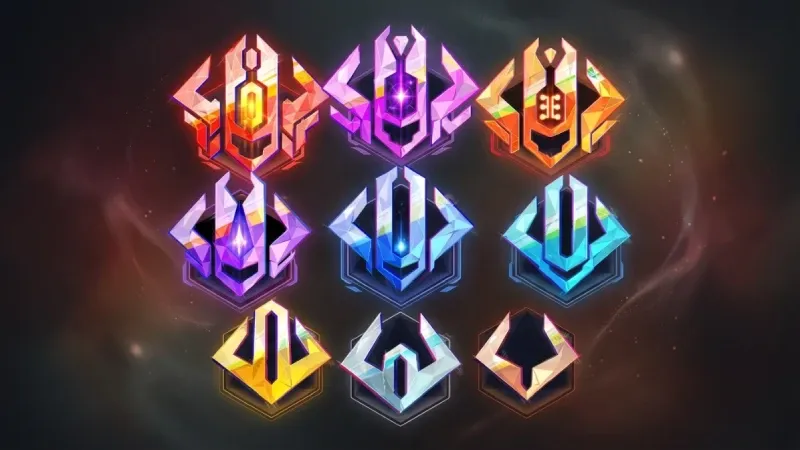
When you do go, go informed: the ladder has its own systems, ranks and points, demotion shields, hero bans from Gold III, seasonal resets, all mapped in our Competitive system guide. Ranked is not a different game, but it is the same game with memory, and the preparation is what the memory rewards.
The First-Week Checklist
- Day one: settings fixed, skeleton learned in Practice, first Quick Matches queued.
- First sessions: one forgiving hero per role tried; the objective habit installed before any aim goal.
- First week: two comfortable heroes in one role, one serviceable pick in another; daily missions collected; the switching reflex practiced at least once per session.
- When it stops feeling new: level 15 will have arrived on its own. Read the ranked guide, place, and start the climb.
- Skip entirely: buying anything in week one, ranking anxiety, and anyone who says the game starts at Competitive. The game started the moment the buttons made sense.
FAQ
Is Marvel Rivals free to play?
Yes, fully. The game is free on PC, PlayStation 5, and Xbox Series X/S, the entire hero roster is available at no cost, and monetization is cosmetics only through the store and Battle Pass. There is no pay-to-win mechanic of any kind: nothing purchasable affects damage, health, or gameplay.
What is the best hero for a complete beginner?
By role: The Punisher for anyone with shooter experience, since his rifle and shotgun need no ability tracking and his 300 HP forgives mistakes; Luna Snow or Rocket Raccoon for support, since Luna's attacks automatically heal allies or damage enemies by target and Rocket's healing spheres bounce around corners; and Groot as the most straightforward frontline. Rotate a couple of roles in week one before settling.
How long before I should play ranked?
Competitive unlocks at account level 15, but the level is the gate, not the readiness test. The standing community advice is to put serious Quick Play hours in first, enough to know two heroes per role and read the objective types automatically, because placing at the moment of unlock typically means a low seed and a slower climb than the same player earns after another week of learning.
What game modes does Marvel Rivals have?
Quick Match is the core casual queue across three objective types: Domination (capture and hold points), Convoy (escort a payload), and Convergence (capture a point, then escort). Competitive is the ranked ladder, unlocked at level 15. Arcade hosts rotating casual formats, and Practice plus vs AI serve as sandboxes for learning hero kits, though they pay no meaningful progression.
Should I focus on one hero or learn several?
Learn a small pool, not one and not ten: two comfortable heroes in your main role plus a serviceable pick in a second role. The game is balanced around counter-picking and free mid-match swapping, so a one-hero player has no answer when their pick is countered, and later, in ranked from Gold III up, hero bans can remove a one-trick's entire plan before the match starts.
Why do I keep losing even when I get kills?
Almost always the objective. Marvel Rivals matches are decided by points held, payloads moved, and timers, not by the scoreboard, and the most common beginner pattern is winning fights away from where the match is being decided. Deaths also cost more than kills earn: every death removes you from the map for long seconds and feeds the enemy team's ultimate charge.
Does anything I do before ranked carry over?
Yes, most things. Account level builds toward the level 15 Competitive unlock, daily missions bank Chrono Tokens for the Battle Pass, achievements pay out Units in large one-time chunks, and every hero you play accumulates Proficiency toward exclusive cosmetics automatically. The only modes that pay essentially nothing are Practice and vs AI, which is why they are a sandbox, not a home.