
 ~10 min
Breeding is Palworld's real endgame: catching gets you a species, breeding gets you the exact Pal you want - the right species, the right passive skills, high IVs, and since 1.0, a shot at a Mutation that hatches stronger than any normal result. The system runs on hidden species math, inheritance probabilities, and base logistics, so a good plan beats any memorized combo list.
The 1.0 launch made breeding more valuable, not less: it added Mutation and four new cakes, comprehensively reviewed breeding combinations, and gated the strongest Pals later into progression, so early access to top-tier results is harder than it was in Early Access. This guide covers the whole system, from your first Breeding Farm to a four-passive, high-IV, mutated endgame team.
Breeding in 1.0 at a Glance
Topic | The short answer |
|---|---|
How to start | Breeding Farm unlocks at Level 19 (100 Wood, 20 Stone, 50 Fiber); one male + one female + Cake = egg |
How offspring is decided | Hidden breeding-power values are averaged; the child is the species closest to the result |
Mutation (new in 1.0) | Every hatch has a small chance at a mutated egg: higher stats plus a unique passive |
New cakes (1.0) | Mushroom, Vegetable, Deluxe Vegetable, and Special Cakes steer stats, egg count, mutations, and inheritance |
Passives | Up to 4 slots inherited from the parents' combined pool; keep the parents' total at 4 desired traits |
Legend passive | Only comes from Legendary Pals; it never appears as a random roll |
IVs | Hidden 0-100 rolls for HP, Attack, Defense, worth up to +30% stats; at least one is always inherited |
The right order | Species first, then passives, then IVs, then Mutation batches, then Awakening |
Breeding Basics: Farm, Cake, Incubator
The Breeding Farm unlocks at Technology Level 19 for 2 Technology Points and costs 100 Wood, 20 Stone, and 50 Fiber. Place it inside your base, assign one male and one female Pal (any two species can pair), and stock the farm's chest with Cake - one Cake is consumed per egg. When the egg appears, hatch it in an Egg Incubator, inspect the result, and keep only the offspring that move your line forward.
Two logistics notes save real time. First, store finished Cake in the breeding farm's own chest, not general storage, so hungry base workers do not eat your breeding fuel. Second, if the RNG grind is not your idea of fun, the world setting for egg incubation time can be set to instant - you still do all the breeding work, you just skip the waiting.
The Cake Supply Chain
Cake is usually the first bottleneck of a serious breeding program, so build a renewable pipeline before you start chaining generations. The classic setup: a wheat plantation and mill for flour, red berry plots, a Mozzarina ranched for milk, a Chikipi for eggs, and a Beegarde for honey. With those five lines running, your base bakes Cake continuously and the farm never idles.
How Breeding Power Decides the Offspring
Every species carries a hidden breeding-power value, with lower values generally representing rarer species. For most cross-species pairs, the game averages the two parents' values and the child is the species whose value sits closest to that average. Three consequences follow:
- The same pair always produces the same species, so results are fully predictable once you know the math.
- Many different pairs converge on one target. Use a reverse-lookup breeding calculator to find parents you already own instead of chasing one rigid recipe - thousands of pair combinations exist.
- Same species plus same species stays that species, which is how you refine passives and IVs after reaching your target.
Named exceptions override the average: certain fixed pairs always produce a special Fusion variant - breeding a Mossanda with a Grizzbolt always yields Mossanda Lux, for example. And the ceiling has a hard rule: Legendary Pals only come from same-species pairs (or by catching them), so no clever combo shortcuts into a Jetragon.
What 1.0 Changed for Breeding
The full release touched almost every part of the system:
- Mutation was added - every hatch now has a low chance at a stronger-than-normal result (full breakdown below).
- Four new cakes let you steer stats, egg count, mutation odds, and passive inheritance.
- Breeding combinations were comprehensively reviewed, with powerful Pals now intended to arrive later in progression - old Early Access combo lists are no longer reliable, so re-check pairs in an updated calculator.
- The surrounding grind shrank: Pal Condensation now needs 48 copies for max rank instead of 116, and the capture bonus completes at 5 catches per species, so filling a breeding stable is much faster.
- Awakening arrived as a separate system that strengthens finished Pals with Radiant Gems from the World Tree - it complements breeding rather than replacing it, so plan the breeding line first and Awaken the keepers.
Mutation: The New Breeding Endgame
Mutation gives every bred egg a small chance to hatch a Pal stronger than the normal result: higher stats and a unique passive skill on top of whatever it inherited. You cannot force a mutation, but you can stack the odds with the new cakes:
Cake | Effect | Use it when |
|---|---|---|
Mushroom Cake | Slightly raises the chance of higher stats at birth | Refining a finished line's stat rolls |
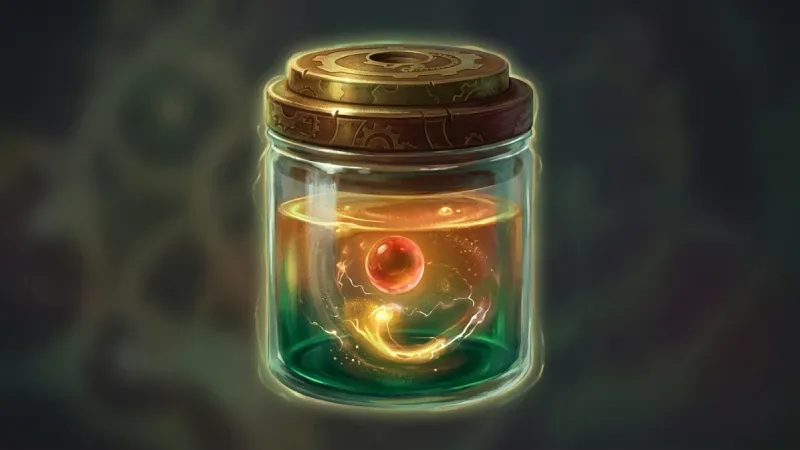
Vegetable Cake | Produces two Pal Eggs at once | Any volume phase - it doubles throughput |
Deluxe Vegetable Cake | Raises mutation odds and makes stat growth more likely | Hunting the mutated jackpot on a clean pair |
Special Cake | Raises the chance of inheriting multiple parent passives | Stacking a 3-4 passive package |
Because Mutation and multi-passive inheritance are both probability systems, volume beats one-egg-at-a-time optimization: run controlled batches on a locked pair, hatch in bulk, and keep only the upgrades. Once a mutated keeper exists, breed it same-species to spread its quality through the line.

Passive Skill Inheritance
Passives are what separate an average Pal from an elite one, and inheritance follows learnable rules. A child has up to four passive slots, filled from the parents' combined pool with a chance of random rolls mixed in. The community-tested sweet spot: keep the parents' combined desired passives at exactly four - 2/2, 1/3, or 0/4 splits all work. Go past four total traits and the odds of random junk crowding out your targets rise sharply.
The practical toolkit:
- Keep "clean" 0-passive mates of each breeding species, one of each gender. Pairing a contaminated Pal with a clean mate lets you isolate the good trait and discard the bad ones over a generation or two.
- Negative passives cannot be removed from an existing Pal - breeding them out against a clean partner is the only fix, and past a few cycles it is usually faster to restart the stage than to launder a badly contaminated line.
- Put the rarer passive on the male parent where possible - community testing suggests male inheritance odds run slightly higher.
- Active skills inherit from the parent's full known pool, not just equipped moves, so keep parents low-level if you want a predictable moveset on the child.
- Bred eggs also carry a flat 5% chance to hatch an Alpha regardless of the parents - a nice bonus, but Alpha status itself is not heritable, so never build a plan around it.
The Legend Chain
The Legend passive (+20% to stats) starts only on Legendary Pals such as Jetragon, Frostallion, Paladius, and Necromus - it never appears as a random roll. To move it onto another species: breed the Legendary with a compatible partner, keep an offspring carrying Legend, and continue the chain toward your target species, keeping the other parent free of unwanted passives at every step so each generation stays clean.
Best Passives to Stack
Two proven packages cover most goals:
Build | Passive stack | Why |
|---|---|---|
Combat carry | Legend, Musclehead, Ferocious, Demon God | Raw damage multipliers stack into boss-melting output |
Base worker | Artisan, Work Slave, Serious, Lucky | Maximum work speed for production lines |
Since 1.0 there is also the new World Tree passive category - huge bonuses paired with a real drawback, such as +50% Attack for lower Defense. They are strong on glass-cannon carries, but read the downside before building a line around one.
IV Breeding: The Hidden Stats
Every Pal rolls hidden Individual Values from 0 to 100 for HP, Attack, and Defense - together worth up to a +30% stat bonus at the top end, which is the difference between two "identical" Pals performing very differently at cap. IVs and passives are separate rolls: a perfect-passive child can still hatch with mediocre stats.
How inheritance works, per community testing across large hatch samples: at least one IV is always inherited from a parent (which stat, and from which parent, is random), and beyond that each stat has roughly a 30% chance to come from a given parent and roughly a 40% chance to roll random. That means high-IV parents meaningfully tilt the odds but never guarantee perfection - it is a numbers game.
The IV toolkit:
- Ability Glasses let you inspect stats to evaluate breeding stock; without them, compare same-level Pals of a species and keep the higher-statted ones.
- IV Fruits (a raid-boss reward) can lock a parent's IV before breeding, massively improving line quality.
- Alpha Pals tend to roll higher IVs than regular spawns, making field bosses and dungeon Alphas excellent starting stock.
- Level promising hatchlings to around 30 before judging - IV differences are hard to read at level 1 and obvious at higher levels.
The Right Order: Species, Passives, IVs, Mutation
Trying to perfect everything at once multiplies the RNG against you. The efficient sequence:
- Secure the species. Use a reverse-lookup calculator to route from Pals you own to the target.
- Assemble the passive package. Chain generations with the four-total rule and Special Cakes until a keeper carries your full stack.
- Refine IVs. Breed the keeper same-species against high-IV partners (IV Fruits help) until the stats land.
- Run Mutation batches. Lock the finished pair, switch to Deluxe Vegetable Cakes, and hatch volume for the jackpot roll.
- Awaken the result. Spend Radiant Gems from the World Tree on the finished Pal - breeding builds the foundation, Awakening raises the ceiling. See our World Tree guide for reaching the gem farm.
Best Combos and Targets
Because thousands of pairs converge on the same children, the smart move is a reverse lookup from your own Palbox - but a few landmark targets anchor most programs:
Target | How to get it | Why it matters |
|---|---|---|
Anubis | Vanwyrm + Cinnamoth (easiest route) | The classic first project: elite Handiwork worker that also fights, obtainable far earlier than its level suggests |
Mossanda Lux | Mossanda + Grizzbolt (fixed Fusion pair) | Example of a named-exception combo that ignores the averaging math |
Legendaries (Jetragon, Frostallion, Paladius, Necromus) | Same-species pairs only | Catch the first from its boss spawn, then breed copies and pass Legend down |
Mutated keeper of any species | Locked pair + Deluxe Vegetable Cake batches | The new 1.0 ceiling: higher stats plus a unique passive |
A worked example of the full pipeline: breed Vanwyrm + Cinnamoth for Anubis, clean its passives against a 0-passive mate, stack Artisan + Work Slave + Serious + Lucky with Special Cakes, then refine IVs same-species. The same template - route, clean, stack, refine - builds any combat carry too, just with the Legend chain feeding the passive stage.

Speed and Logistics for Serious Programs
Volume wins, so engineer for throughput. There is no cap on Breeding Farms - run three or four in parallel, one per chain, each chest stocked with several Cakes so nothing idles. Parents with the Nocturnal passive keep breeding through the night, and the Philanthropist passive shortens breeding times further. Vegetable Cakes double egg output during volume phases, and the instant-incubation world setting removes the last wait. A well-built program hatches dozens of eggs per session; expect a serious multi-passive combat line to still take hundreds or thousands of eggs, and budget your patience accordingly.
Common Breeding Mistakes
- Using Early Access combo lists. 1.0 reviewed the combinations and gated strong Pals later - verify every pair in an updated calculator before spending Cake.
- Perfecting IVs before the passive package is stable. Passives are the harder fix; lock them first, then chase stats.
- Overloading parents with traits. More than four combined desired passives invites random junk into the slots.
- Breeding through contamination. After a few cycles, restarting a stage beats laundering a line full of negative passives.
- Treating Awakening as a substitute. It multiplies a good Pal; it does not fix a bad line. Breed first, Awaken the keeper.
- Ignoring the Cake pipeline. A program that outruns its bakery stalls exactly when the odds start paying off.
Save -20% on your boost ⚡

FAQ
How do you unlock breeding in Palworld?
Unlock the Breeding Farm at Technology Level 19 for 2 Technology Points, then build it with 100 Wood, 20 Stone, and 50 Fiber. Assign one male and one female Pal, stock the farm's chest with Cake (one per egg), and hatch the resulting egg in an Egg Incubator.
How is the breeding result determined?
Every species has a hidden breeding-power value. For most pairs the game averages the parents' values and the child is the species closest to that average, so the same pair always produces the same species. Fixed Fusion pairs (like Mossanda + Grizzbolt = Mossanda Lux) override the math, and Legendaries only come from same-species pairs.
What is Mutation in Palworld 1.0?
A new 1.0 system: every bred egg has a low chance to be a mutated egg, hatching a Pal with higher stats and a unique passive skill. The Deluxe Vegetable Cake raises the odds, and running high-volume batches on a locked pair is the practical way to hunt one.
What do the new cakes do?
Mushroom Cake slightly raises the chance of higher stats at birth, Vegetable Cake produces two eggs at once, Deluxe Vegetable Cake raises mutation odds and stat growth, and Special Cake improves the chance of inheriting multiple parent passives. Match the cake to the phase of your program.
How does passive skill inheritance work?
A child has up to four passive slots filled from the parents' combined pool, with random rolls mixed in. Keep the parents' combined desired passives at exactly four (2/2, 1/3, or 0/4) for the best odds, use clean 0-passive mates to isolate traits, and note that the Legend passive only comes from Legendary Pals - it never rolls randomly.
What are IVs and how do I breed for them?
IVs are hidden 0-100 rolls for HP, Attack, and Defense worth up to +30% stats. At least one IV is always inherited from a parent, with roughly a 30% chance per stat from a given parent and about 40% random. Use Ability Glasses to inspect stock, IV Fruits to lock a parent's roll, and Alpha Pals as high-IV starting stock.
What should I breed first in Palworld?
Anubis, via the Vanwyrm + Cinnamoth route. It is an elite Handiwork worker that also fights, arrives far earlier than its level suggests, and the project teaches the whole pipeline - route the species, clean the passives, stack Artisan and Work Slave, then refine IVs same-species.